Hackney Council rules for floral displays and permits
Posted on 20/10/2026
Hackney Council Rules for Floral Displays and Permits: A Practical Guide for Local Businesses, Event Planners and Residents
If you are planning a floral display in Hackney, the details matter more than most people expect. A lovely window display, pavement planter, wedding installation, memorial tribute or market stall arrangement can look effortless from the outside, but once flowers move into shared public space, Hackney Council rules for floral displays and permits can come into play. That is where people get caught out. One minute you are arranging blooms, the next you are wondering whether you need permission, what counts as an obstruction, and who is actually responsible if something blocks the pavement.
This guide breaks the topic down in plain English. You will find out how floral displays are usually assessed, when permits may be needed, what practical risks to watch for, and how to plan a display that feels polished rather than problematic. We will also look at the common mistakes people make, some useful best-practice pointers, and a realistic step-by-step approach you can follow before you set anything out on the street. Fair warning: the rules are not always glamorous, but they do save a lot of hassle.
Table of Contents
- Why Hackney Council rules for floral displays and permits matters
- How Hackney Council rules for floral displays and permits works
- Key benefits and practical advantages
- Who this is for and when it makes sense
- Step-by-step guidance
- Expert tips for better results
- Common mistakes to avoid
- Tools, resources and recommendations
- Law, compliance, standards and best practice
- Options, methods and comparison table
- Case study or real-world example
- Practical checklist
- Conclusion
- Frequently asked questions
Why Hackney Council rules for floral displays and permits Matters
At first glance, a floral display seems harmless. Flowers are beautiful, temporary, and usually friendly to the street scene. But once a display reaches beyond a private threshold and into shared space, it can affect safety, access, visibility, trading conditions and the general flow of foot traffic. In a busy London borough like Hackney, that matters.
Think of the difference between a vase of roses on a cafe counter and a row of planters narrowing a pavement outside a shop. One is private decor. The other may become a public-space issue. Councils generally look at whether people can pass safely, whether emergency access is preserved, whether the display creates trip hazards, and whether it changes how the street is used. Nothing dramatic, usually. Just the small stuff that becomes a big headache if ignored.
For local businesses, event organisers, florists and residents, understanding the rules early can prevent awkward conversations, delays, removals and avoidable costs. It also helps you design the display properly from the start. Better placement, sturdier containers, clearer boundaries, less last-minute panic. You know the feeling.
Expert summary: the safest approach is to treat any floral display that reaches onto the pavement, road edge, frontage or shared public realm as something that may need checking in advance. If in doubt, assume it needs review before it goes out.
How Hackney Council rules for floral displays and permits Works
The exact process depends on what you are putting out, where it sits, and how it affects the surrounding area. That may sound vague, but in practice it comes down to a few questions. Is the display inside a private property boundary, or does it extend into public land? Is it stationary or temporary? Does it take up pedestrian space? Could it block sightlines, entrances, dropped kerbs, bins, bus stops or parking bays?
If the answer to any of those is yes, you are in permit territory more often than not. Some arrangements may be fine without formal permission if they remain wholly within private premises and do not create a nuisance or obstruction. Others, especially those involving pavement frontage, street trading, promotional activity or event set-ups, are more likely to need approval or coordination with the council. In real life, this is where people get caught: "It was only for one day" is not always a persuasive argument once the pavement is jammed.
Hackney Council may look at several things when considering a floral display or related permit request:
- Public safety: can people walk through comfortably and safely?
- Accessibility: is there enough space for wheelchairs, pushchairs and mobility aids?
- Visibility: does it obstruct road users or create blind spots?
- Duration: is the display temporary, seasonal or ongoing?
- Location: is it on a shopfront, pavement edge, event site or internal premises?
- Structure: are the pots, stands or plinths stable enough not to topple in wind or heavy footfall?
For a florist or event planner, the practical takeaway is simple: the council is less concerned with the floral theme and more concerned with how the display behaves in the real world. A good display should look calm and intentional. A bad one looks like it drifted into the pavement and never checked in with anybody.
If your floral project is linked to a retail business, wedding venue, memorial arrangement or delivery operation, it also helps to look at the wider customer journey. Pages such as about us, delivery and terms and conditions can support trust, service clarity and expectations around orders and fulfilment. That sort of consistency matters more than people think.
Key Benefits and Practical Advantages
Following the right permit route is not just about avoiding trouble. Done properly, it improves the whole presentation. There is a reason well-run displays look effortless. They have usually been planned with structure, permissions and maintenance in mind.
- Fewer enforcement issues: you reduce the risk of being asked to move or remove the display at short notice.
- Safer public space: people can pass without stepping into the road or squeezing around obstacles.
- Better visual impact: a tidy, approved layout tends to look more premium and intentional.
- Improved customer confidence: businesses that handle compliance well tend to feel more reliable.
- Less stress on the day: when the structure is agreed in advance, the setup runs more smoothly.
There is also a reputation angle. If your business regularly works with flowers in Hackney, you want people to associate you with tidy installations, not with staff repositioning planters under pressure while a delivery van waits behind them. Not exactly the mood.
For some readers, the main benefit is peace of mind. For others, especially shop owners and event teams, the main benefit is avoiding disruption during busy trading hours or high-pressure setup windows. Either way, having the right process in place usually saves time later. That is the thing with permissions: a little effort upfront, fewer headaches after.
Who This Is For and When It Makes Sense
This topic is relevant to several groups, and the most common mistake is assuming it only applies to large commercial events. It does not.
- Florists: especially those installing window work, entrance arrangements or seasonal frontage displays.
- Cafes and restaurants: particularly where planters, menu stands or decorative flowers edge onto the pavement.
- Wedding and event planners: if ceremonies, receptions or receptions spill into shared access areas.
- Retailers: when floral displays form part of shopfront merchandising or promotions.
- Residents and community groups: for memorials, celebrations or neighbourhood beautification projects.
- Market traders: if stock or decorative arrangements affect stall boundaries or pedestrian flow.
It makes sense to check the rules whenever your floral display is visible from the street and physically interacts with public space. A summer display in full bloom can look fantastic on a sunny afternoon, but by 5pm on a rainy Hackney weekday it may be more crowded, more slippery and less forgiving than it first appeared. That is the moment permissions become practical, not bureaucratic.
If you are unsure, ask a simple question: would someone walking past have to change direction because of this display? If yes, it is worth checking before the display is installed.
Step-by-Step Guidance
Here is a clear way to approach floral displays and permits without overcomplicating it.
- Define the display. Write down exactly what you want to install. Is it a window arrangement, pavement planter, garland, wedding arch, tribute piece or seasonal frontage feature?
- Map the footprint. Measure how much space it will use. Include the base, supports, overhang and any barrier or stand. Many issues come from the "just a little bit more" problem.
- Check where it sits. Keep clear whether the display is entirely private or touches public land, pavement or the building line.
- Consider pedestrian flow. Ask what happens at busy times: school runs, lunch periods, market days, evening footfall, delivery windows.
- Think about stability and weather. Wind, rain and repeated handling can turn a nice arrangement into a tipping hazard. Heavy bases and secure fixing help.
- Review visibility and access. Make sure the arrangement does not block shop windows, entrances, crossing points or accessibility routes.
- Confirm whether permission is needed. If the display is likely to affect public space or trading conditions, a permit or council approval may be required.
- Prepare supporting details. A simple plan, sketch or photo can help explain what you intend to do. Keep it clear and honest.
- Set maintenance responsibility. Decide who waters, checks, removes, cleans and stores the display. A display without an owner becomes a problem very quickly.
- Review after installation. Once in place, step back and look at it from a pedestrian's point of view. If it feels tight, it probably is.
A small practical note from real-world experience: walk the route yourself if you can. Stand where a wheelchair user, parent with a buggy, or delivery worker would stand. You notice different things at that height and pace. The layout either breathes or it does not.
Expert Tips for Better Results
Good floral displays are rarely the most complicated ones. They are the ones that feel controlled, safe and easy to maintain. A few details make a huge difference.
Use weighted, low-maintenance containers. Lightweight pots are tempting, but they do not always behave well in wind or heavy footfall. A stable base is worth the extra effort.
Leave more room than you think. People drift sideways, stop to look at phones, carry shopping bags, and change direction without warning. Pavements in London have a way of shrinking when it gets busy.
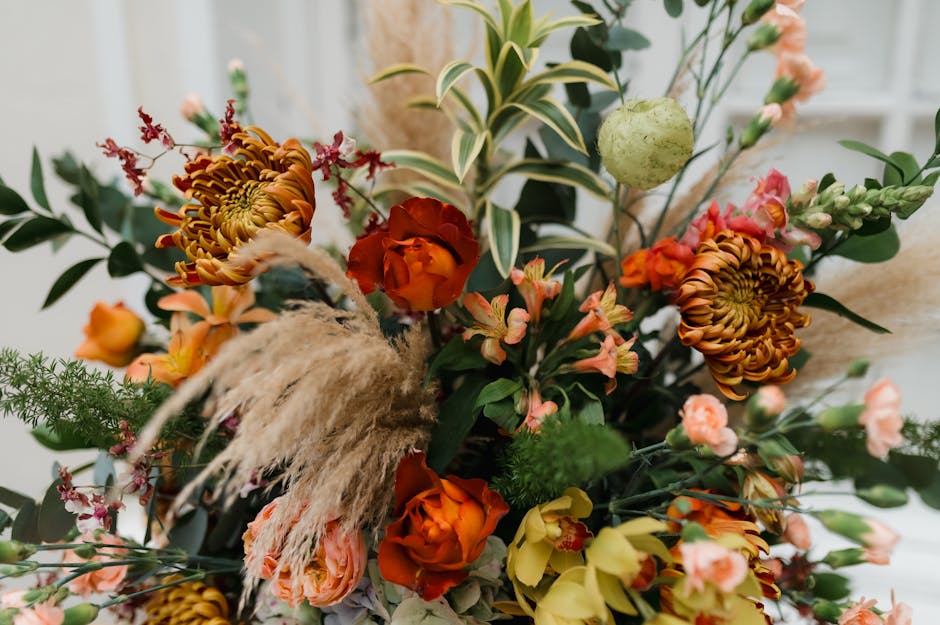
Choose flowers that suit the setting. Soft, delicate stems can look lovely indoors but get damaged fast outdoors. Hardy arrangements often work better for extended street-facing displays. If you are choosing styles for different occasions, browsing categories like luxury flowers, flowers in a vase and florist choice can help narrow down what is structurally practical as well as pretty.
Build in a maintenance rhythm. In our experience, problems often start on day two or three, not on launch day. Petals droop, water needs topping up, labels fall off, ribbons loosen. A tiny maintenance plan prevents the display from looking tired too soon.
Keep records. Save copies of permits, approval emails, site photos and any agreed conditions. If someone queries the display later, you will be glad you have them. Honestly, it is one of those boring habits that becomes heroic at the exact right moment.
Match the display to the purpose. A wedding entrance wants a different treatment from a funeral tribute, and a community floral event needs a different level of durability from a one-hour photoshoot. That is obvious, but people sometimes forget it in the rush.
Common Mistakes to Avoid
The same errors come up again and again, and they are easy to avoid once you know what to look for.
- Assuming flowers are exempt: a floral display is still an object in space, and the location matters more than the material.
- Ignoring pedestrian width: what looks "fine" to one person may be uncomfortably narrow for others.
- Setting up first and asking later: this is probably the single most common mistake. It often creates more friction than necessary.
- Forgetting weather effects: rain, wind and cold can change how secure or visible a display is.
- Using weak fixings: a pretty display that topples is a bad display. Simple as that.
- Leaving no one in charge: if nobody owns the upkeep, the display deteriorates and becomes awkward to manage.
- Not checking adjacent uses: bins, shutters, loading bays, bus stops and cycle routes all matter.
One tiny but important point: do not rely on how things looked for someone else nearby. A florist across the street may have different permissions, a different frontage, or a different risk profile. Same borough, different situation. That distinction matters.
Tools, Resources and Recommendations
You do not need a specialist kit list for every floral display, but a few tools help keep things orderly and compliant.
- Measuring tape: useful for checking frontage width, display depth and walking space.
- Site photos: take wide-angle shots before and after installation so you can review clearances.
- Simple sketch or layout plan: especially helpful for larger displays or permit discussions.
- Weather-resistant containers: good for street-facing work and longer installations.
- Checklists: use one for setup, one for maintenance and one for removal.
- Internal service pages: if the display is linked to a purchase, product page or occasion order, relevant pages like flower care, guarantees and contact us can help customers understand what to expect.
If you are planning floral arrangements for a business or multi-location event, it is also worth looking at categories such as corporate gifting, weddings and sympathy to align the design with the event type. That does not solve the permit issue on its own, of course, but it helps you think about the display as a complete experience rather than just a bunch of stems in a space.
Law, Compliance, Standards and Best Practice
Because this topic touches public space and access, it is best handled carefully. Exact requirements can vary depending on the type of display, its location, and the way Hackney Council treats the activity in question. Some arrangements may need a permit, some may need prior approval, and some may be allowed only if they remain within certain boundaries. The right answer depends on the facts on the ground.
From a best-practice perspective, the safest assumptions are:
- do not obstruct footways, entrances, crossings or accessible routes;
- do not create a trip, topple or spill risk;
- do not block visibility for road users or pedestrians;
- keep temporary installations temporary;
- get agreement before placing anything in shared public space;
- document what you installed and where;
- remove the display promptly when the permit period ends or the arrangement is no longer safe.
If your floral display is connected to a commercial activity, additional rules may apply around trading, advertising or frontage use. If it is part of a ceremony or memorial, sensitivity and practicality matter just as much as compliance. In a community setting, being tidy and considerate goes a long way.
Truth be told, councils tend to respond better when proposals are clear, modest and thought through. A neat plan with a sensible footprint is far easier to support than a vague "we'll just put a few arrangements outside and see how it goes." See how that sounds? Not ideal.
Options, Methods and Comparison Table
Choosing the right approach depends on how visible the display is, how long it will stay up, and whether public land is involved. The table below compares common scenarios in practical terms.
| Display type | Typical location | Permit risk | Key considerations |
|---|---|---|---|
| Indoor floral display | Inside a shop, venue or private home | Low | Usually no council issue if it stays fully private and does not obstruct access. |
| Window arrangement visible from the street | Behind glass or within the premises boundary | Low to moderate | Usually fine, but watch for internal access and safety if props or structures are close to entrances. |
| Pavement planter or frontage flowers | Outside a business on shared public space | Moderate to high | May need permission because of pedestrian access, visibility and the public realm. |
| Event floral installation | Wedding, launch, market or community event | Moderate to high | Depends on duration, footprint, crowd flow and whether any barriers or temporary structures are involved. |
| Tribute or memorial floral display | Churchyard, venue frontage, roadside or community space | Varies | May need coordination where it affects access, placement or ongoing maintenance. |
A simple way to choose the right method is to start with the least intrusive option that still achieves the look you want. If an arrangement can be set back a little from the pavement edge without losing impact, that is often the cleanest solution. And yes, sometimes the clever choice is the boring one. The boring one tends to get approved.
Case Study or Real-World Example
Imagine a small Hackney cafe planning a spring display for the front of the shop. The owner wants two large planters, a hanging arrangement above the doorway, and cut flowers by the entrance to catch the eye of passers-by. Lovely idea. Very photogenic.
Before doing anything, the team measures the frontage and notices that the planters would leave only a narrow channel for people walking past, especially on busy school-run mornings. They also realise that the doorway already needs clear access for deliveries and customers with prams. Rather than pushing ahead and hoping for the best, they adjust the plan:
- the planters move closer to the facade;
- the hanging display is kept fully within the building line;
- the cut flowers are placed in a stable window-facing arrangement instead of on the pavement;
- staff are assigned to check water levels and reposition any items that drift.
The result is still attractive, still seasonal, and far less likely to cause problems. The frontage feels calmer too. People can walk by without hesitation, which sounds minor until you see how many small confrontations are avoided by simply giving everyone a bit of space.
That is the general lesson with Hackney Council rules for floral displays and permits: the most successful displays are not the biggest. They are the ones that fit the street, the purpose and the people moving through it.
Practical Checklist
Use this before installation day, or even better, before you finalise the design.
- Have you confirmed whether the display stays fully within private property?
- Will any part of it sit on pavement, verge, road edge or other public space?
- Is there enough room for pedestrians, wheelchair users and buggies?
- Could the display block a doorway, sign, loading point or visibility line?
- Is it stable enough for weather, footfall and everyday use?
- Do you know who will water, clean, check and remove it?
- Have you kept photos, measurements or a simple layout plan?
- Do you have any permit or approval documentation saved in one place?
- Have you checked the finish time, removal time and any operating conditions?
- Does the display still look neat from street level, not just from inside the venue?
If you can tick most of those confidently, you are in a good place. If not, pause and fix the weak points first. A bit of restraint now usually means a much smoother day later.
Conclusion
Hackney Council rules for floral displays and permits are not really about flowers alone. They are about space, safety, access and shared use of the street. Once you see them that way, the whole thing becomes easier to manage. A good floral display should add beauty without creating friction. That is the sweet spot.
Whether you are a florist, a shop owner, a planner or a resident arranging something meaningful, the best approach is simple: define the footprint, check the location, think about public access, and confirm permission before you set anything out. It saves time, protects the display, and keeps the experience pleasant for everyone passing by.
Get a free quote today and see how much you can save.
And honestly, once the groundwork is done, you can get back to the enjoyable part: choosing blooms, balancing colour, and making something that feels right for Hackney, not just compliant, but genuinely lovely.
Frequently Asked Questions
Do I need a permit for floral displays in Hackney?
It depends on where the display sits and whether it uses public space. If the flowers stay entirely inside private premises, a permit may not be needed. If they extend onto the pavement or affect access, a permit or approval is more likely.
What counts as a floral display under council rules?
It can include planters, entrance arrangements, window-facing floral installations, seasonal frontage decor, event flowers and temporary decorative features. The key issue is not just the flowers themselves, but their placement and effect on the surrounding space.
Can I put planters outside my shop without permission?
Not always. Even if the planters look modest, they may still count as an obstruction or use of public space. The safer approach is to check before placing anything on the pavement or near the kerb.
Are wedding floral displays treated differently from shopfront displays?
Often, yes, because the purpose, duration and setting can be different. A wedding display may be short-lived but more elaborate, while a retail frontage display may be ongoing. Both can still need permission if they affect public access.
How much space should I leave for pedestrians?
There is no one-size-fits-all answer in this article because the exact requirement depends on the location and the council's position. In practical terms, leave more space than you think you need, and always prioritise clear, comfortable movement for passers-by.
What happens if I install a display without checking first?
You may be asked to move it or remove it, and in some cases there could be enforcement action or avoidable delays. It is much easier to sort out permissions before installation than after someone has already complained.
Do indoor window displays need council approval?
Usually not, if they stay fully inside the premises and do not affect access or safety. But if a display is oversized, fixed in a risky way, or connected to a frontage structure, it is sensible to review it carefully.
How long does a floral display permission usually last?
That can vary depending on the type of approval, the display, and the time period requested. Temporary event displays and longer frontage arrangements may be treated differently, so check the agreed duration very carefully.
What documents should I keep for a floral display permit?
Keep any approval emails, permit records, site photos, measurements and setup notes. If the display changes over time, update the record. It sounds dull, but it helps if questions come up later.
Can florists help with compliance as well as design?
Yes, and a good florist often does. Practical florists think about stability, access, delivery timing and how the arrangement will behave in real life, not just how it looks on the day.
What is the biggest mistake people make with floral displays in public spaces?
The biggest mistake is assuming that a beautiful display does not need a safety or access check. Pretty and compliant should go together. If one is missing, the whole thing becomes harder to manage.
Where should I start if I want to plan a compliant display in Hackney?
Start with the location, measure the space, and decide whether anything will sit in or near public access routes. From there, check whether permission is needed, then design the display around the real space you have rather than the space you wish you had.